Sophiaverse is a gamified metaverse where AI and Web3 converge, centered around Soph the humanoid robot and her digital companions. It reimagines how people interact with artificial intelligence through play, creativity, and decentralized technology. I joined the team as lead UI designer, shaping how users explore and connect within this evolving digital world.
Sophiaverse set out to bridge a tricky divide between traditional gamers and the complexities of Web3. New players were daunted by features like wallets and NFTs, while experienced users wanted advanced tools without extra friction. Adding to the challenge, the idea of gamified AI conversations was completely new demanding an interface that felt intuitive, inviting, and unlike anything before.
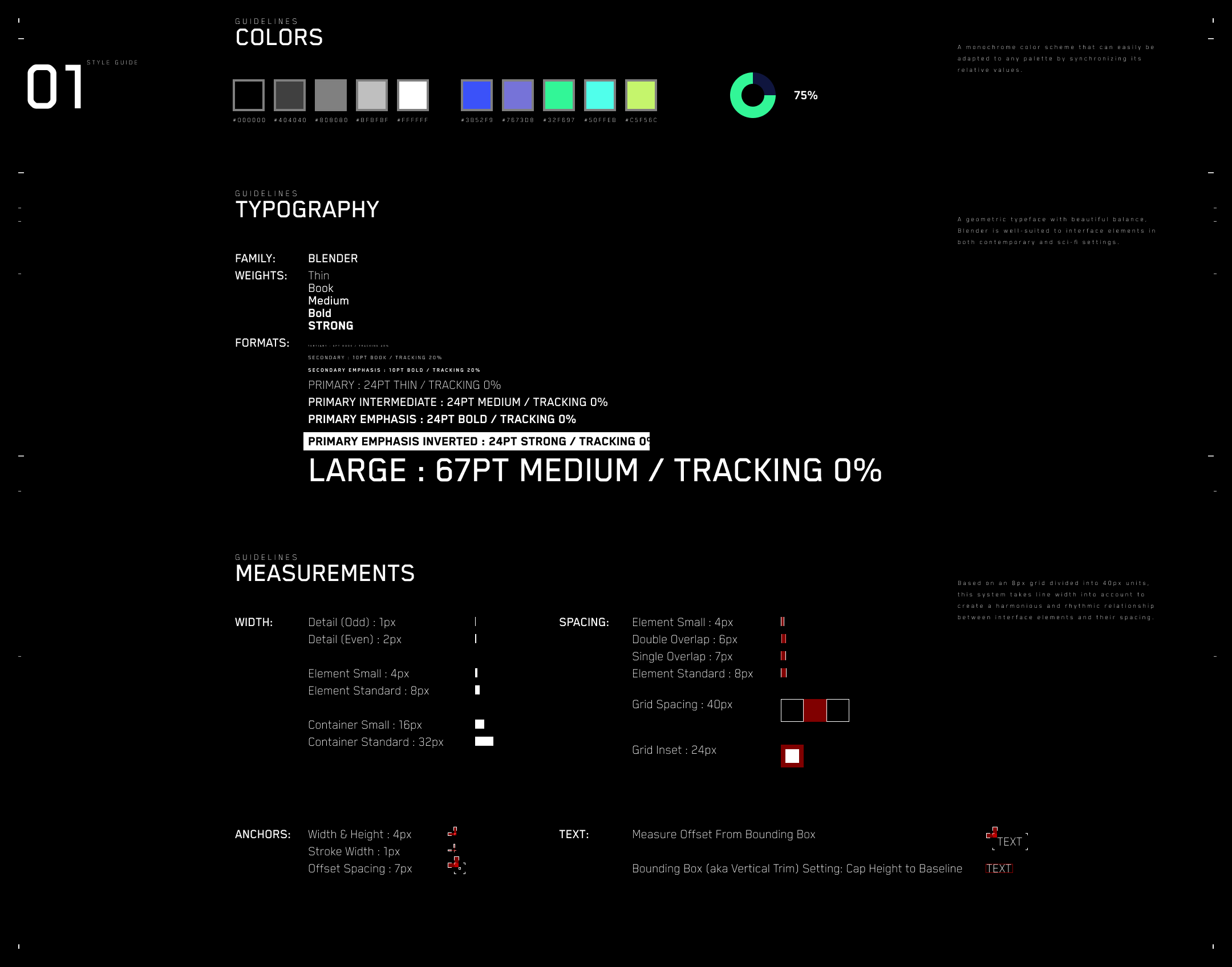
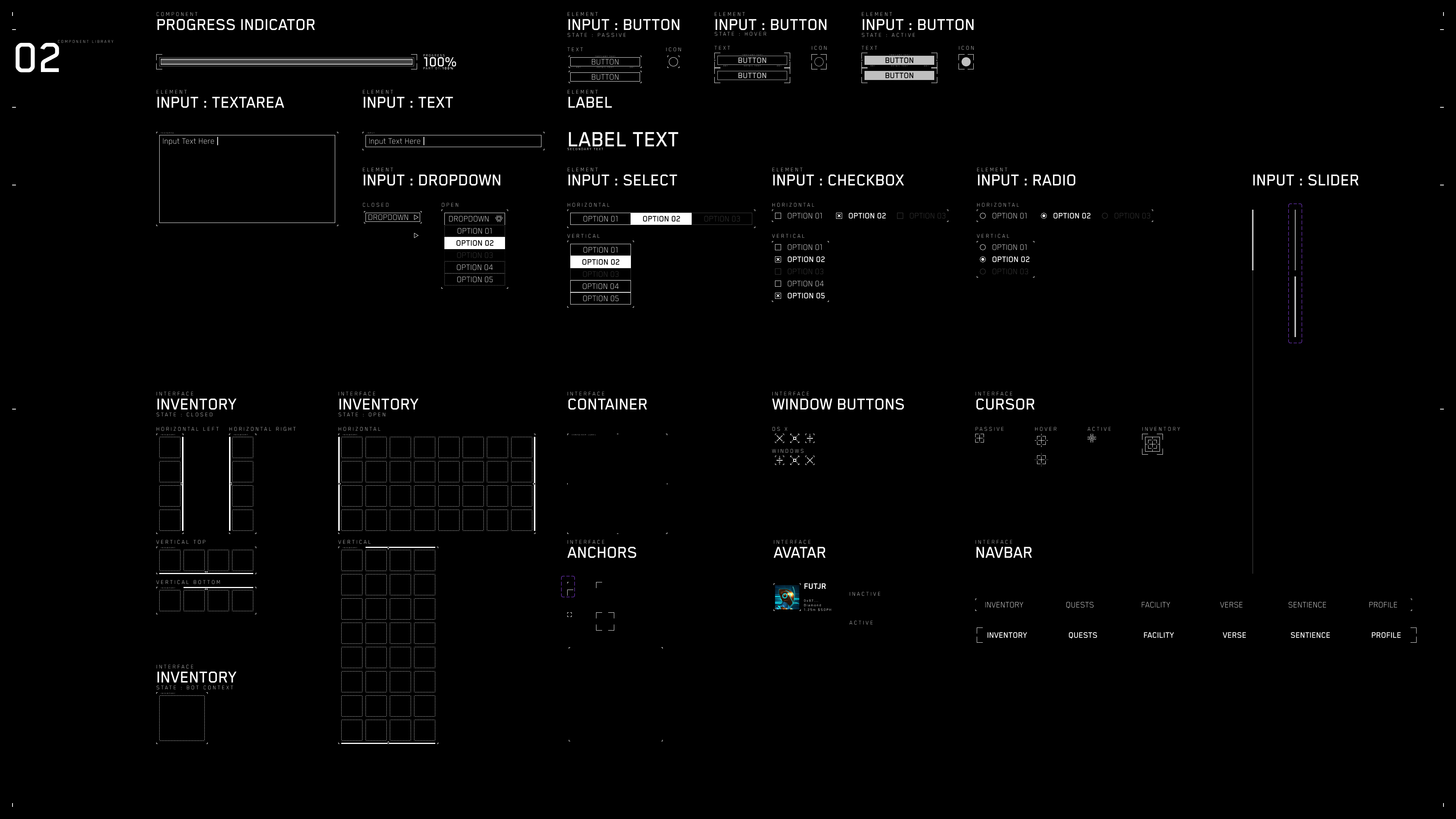
As UI design lead, my first goal was to build a unified design system that brought consistency to Sophiaverse’s futuristic identity. From button styles to navigation flows, every interaction was standardized to feel seamless whether users were gaming, chatting with AI, or exploring Web3 features. I built the entire system in Figma with reusable components and dynamic variants, enabling effortless collaboration and pixel‑perfect consistency across the platform.
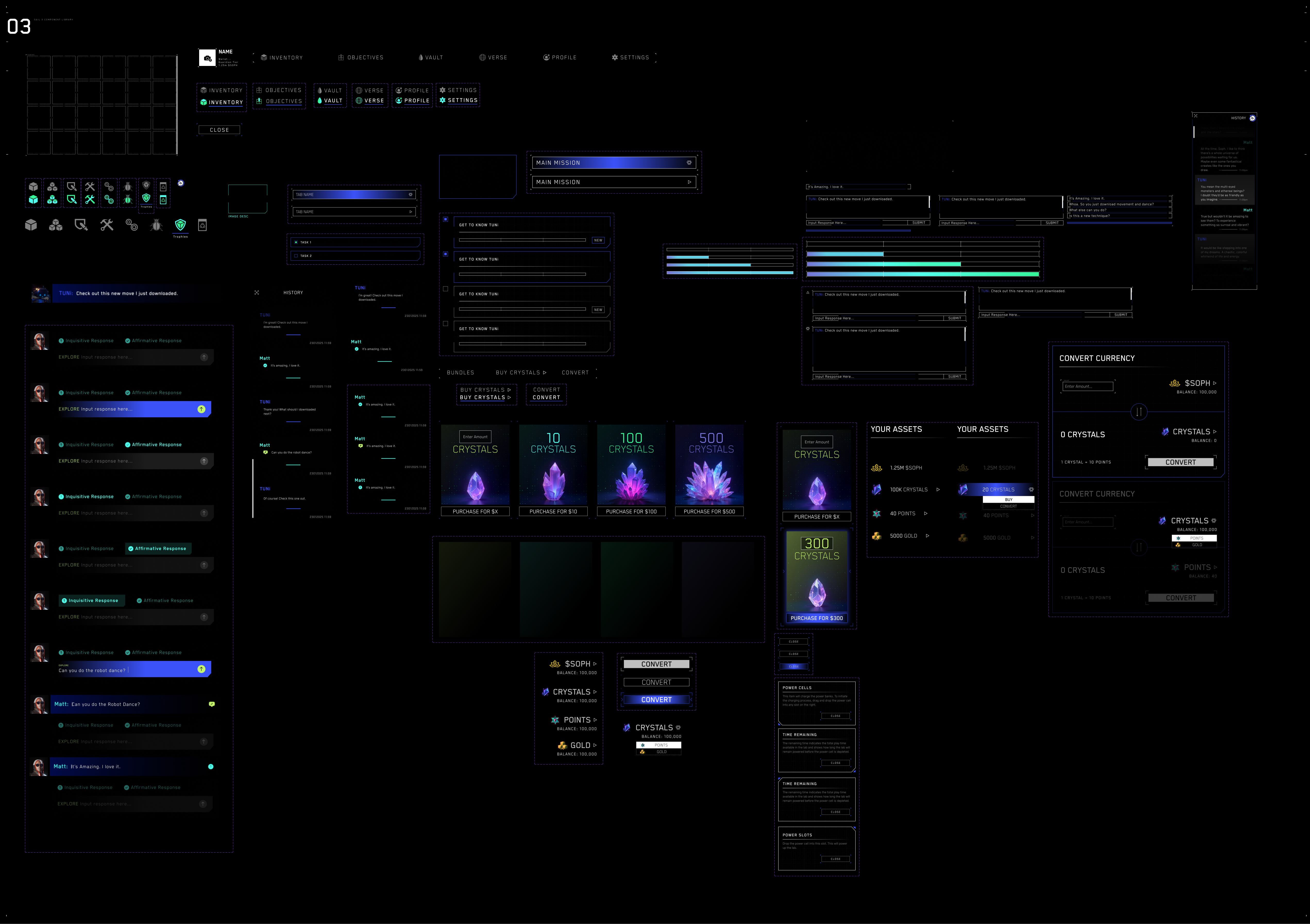
My goal was to design a futuristic interface infused with HUD‑style overlays and dynamic data streams, inspired by games like Cyberpunk 2077 and Death Stranding. I drew on familiar motifs from character‑selection screens in Street Fighter to compact mission panels in Final Fantasy to ground users in recognizable patterns. This approach bridged the gap between gaming and Web3, introducing wallets and NFTs as natural quest rewards, while on‑demand tooltips made new concepts easy to grasp without breaking immersion.
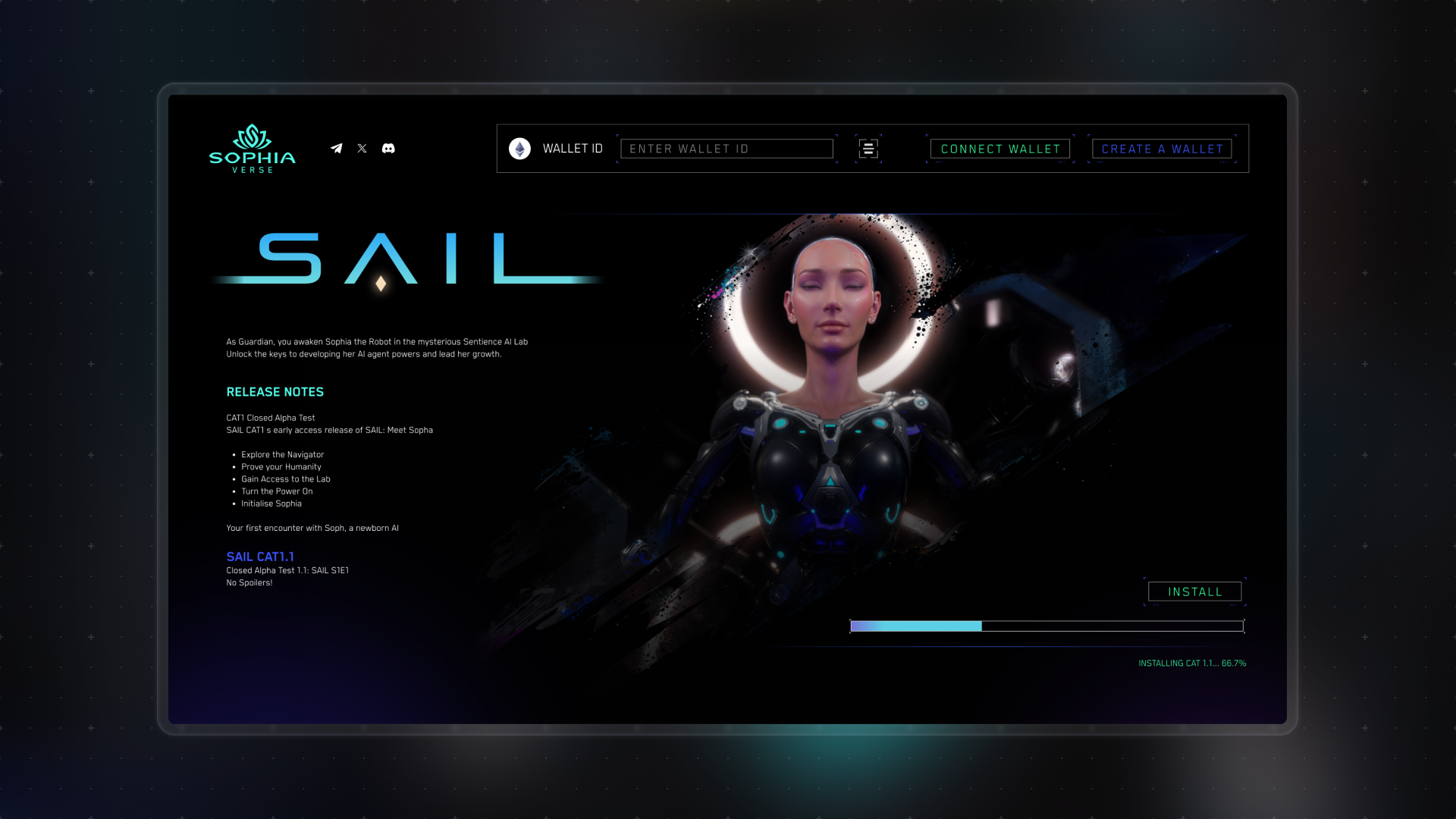
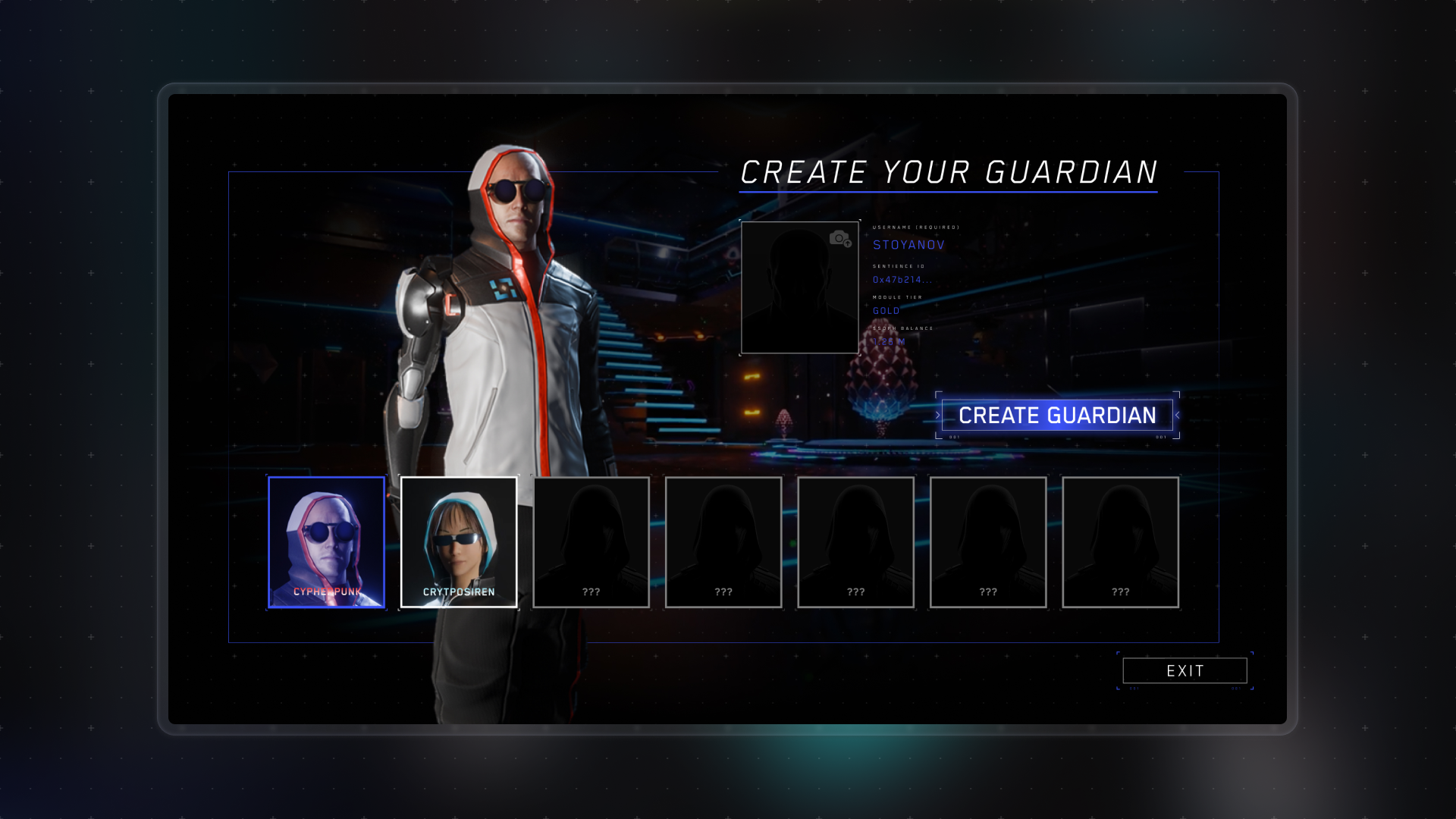
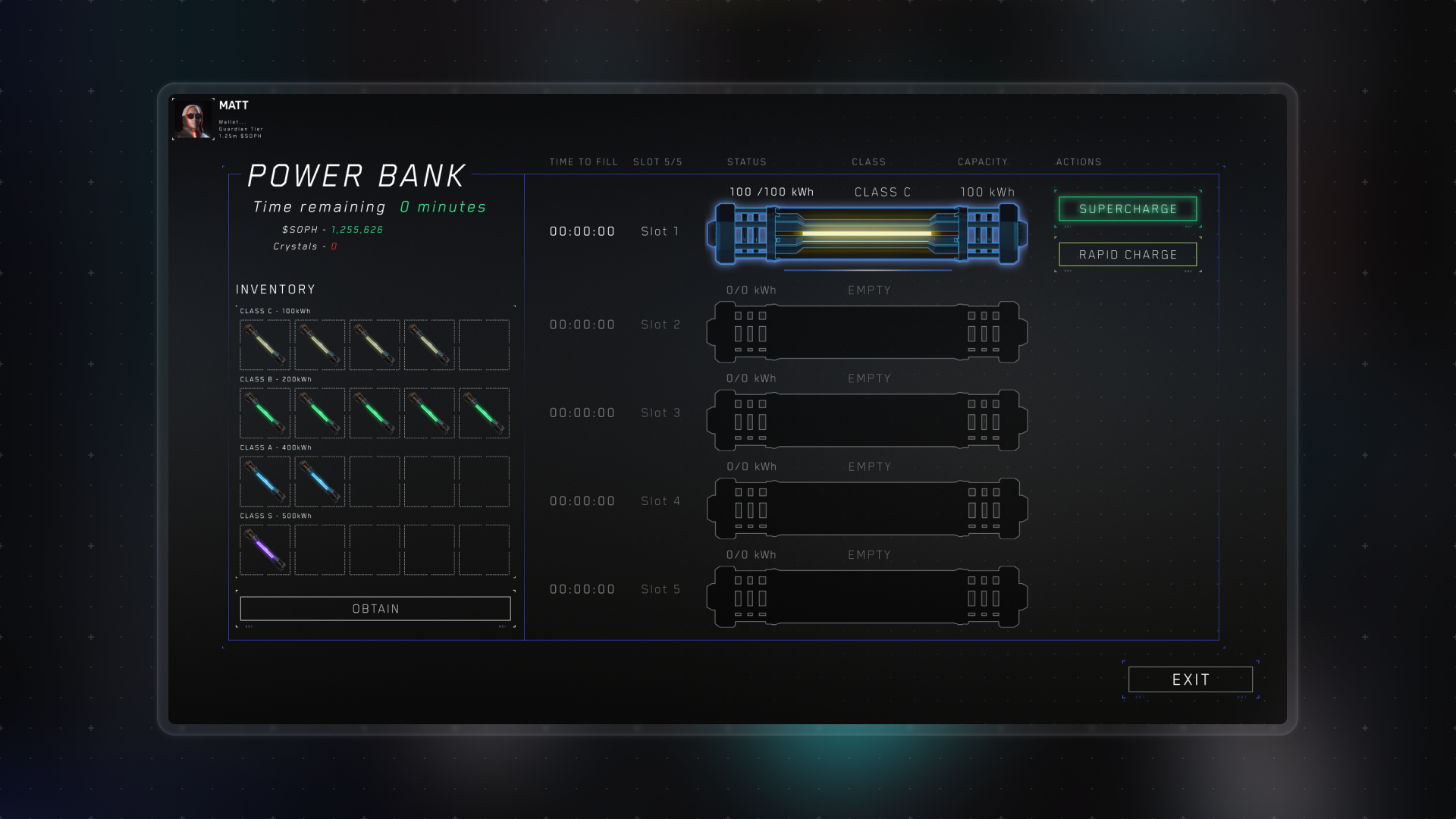
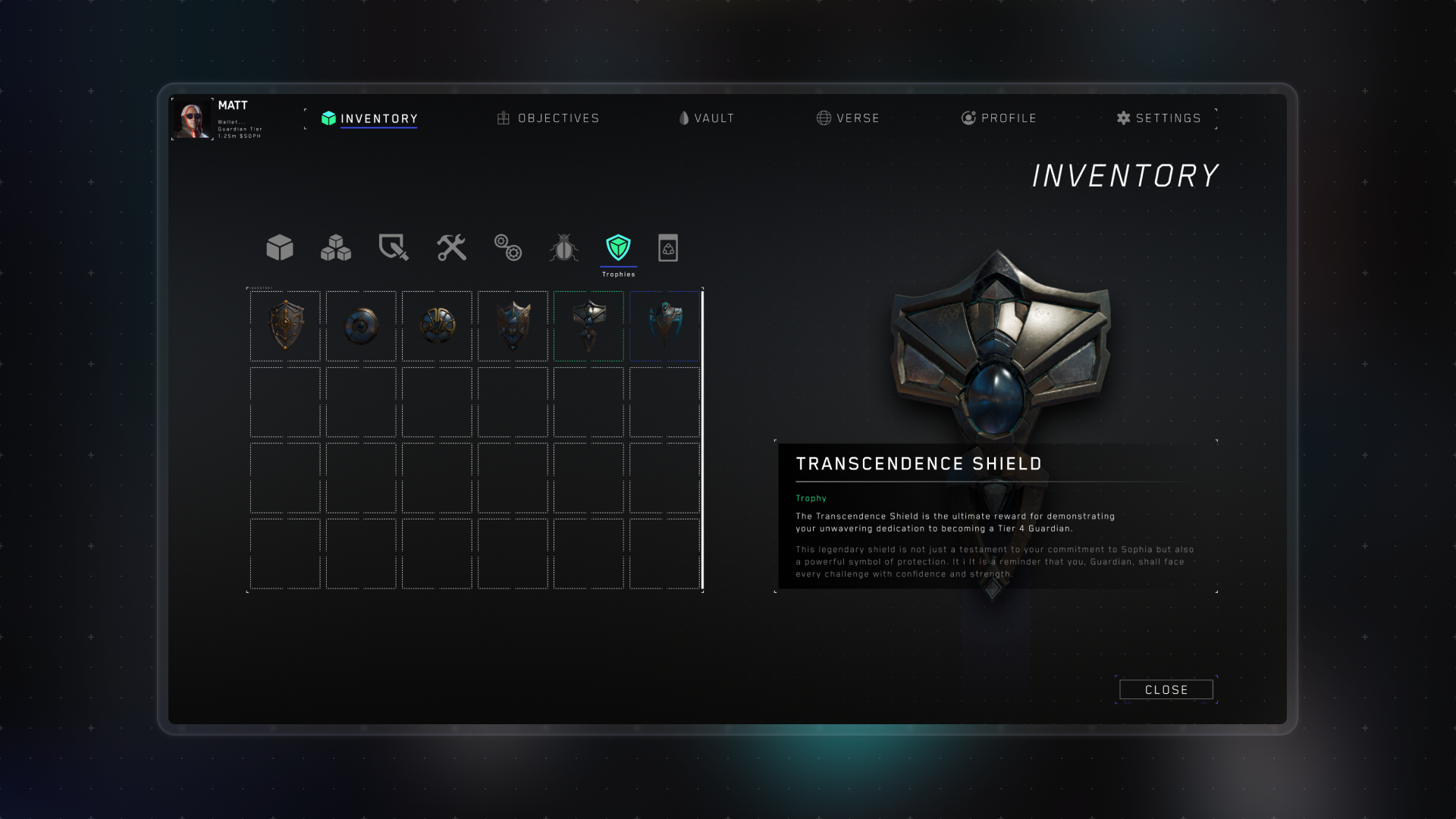
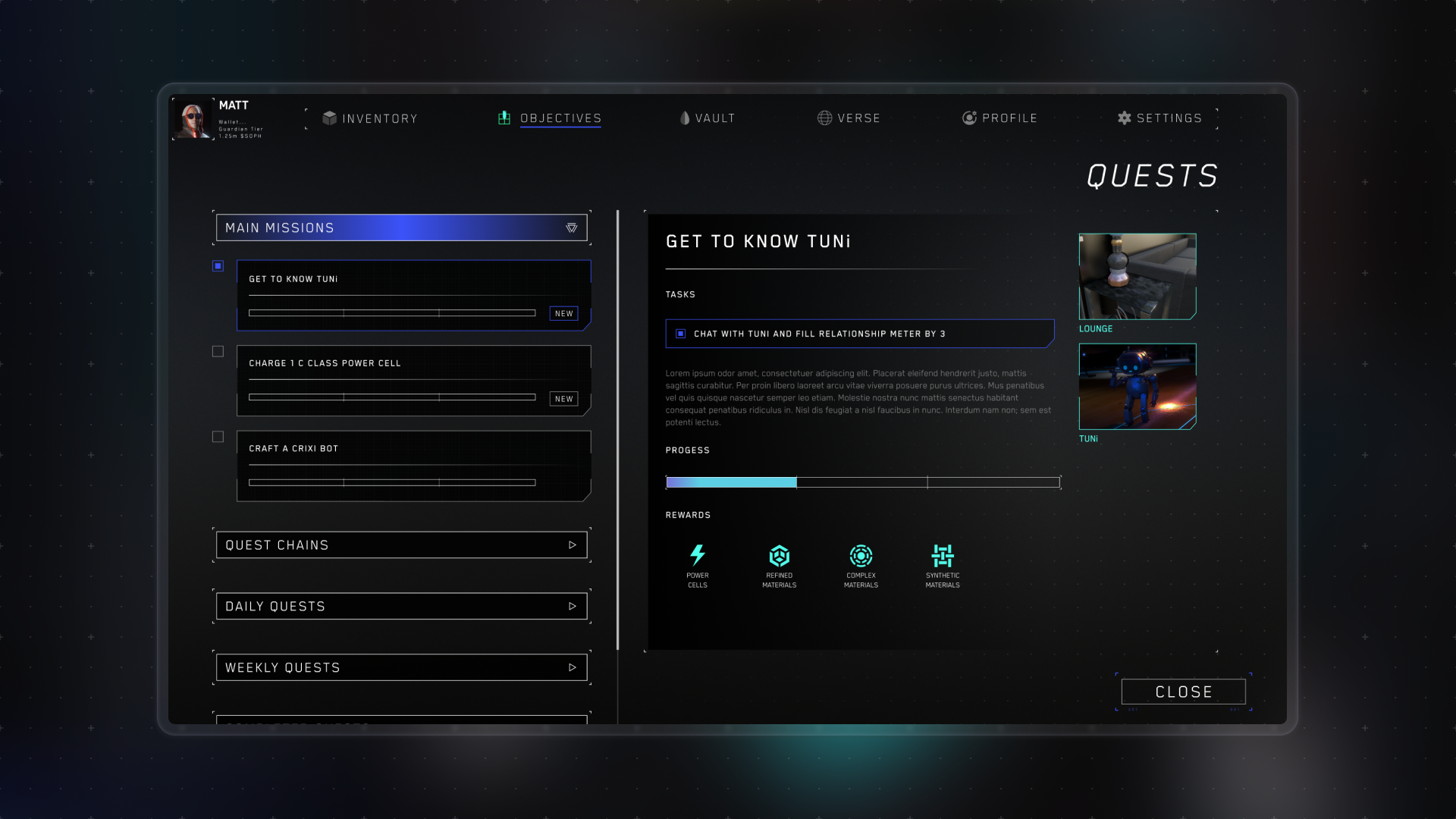
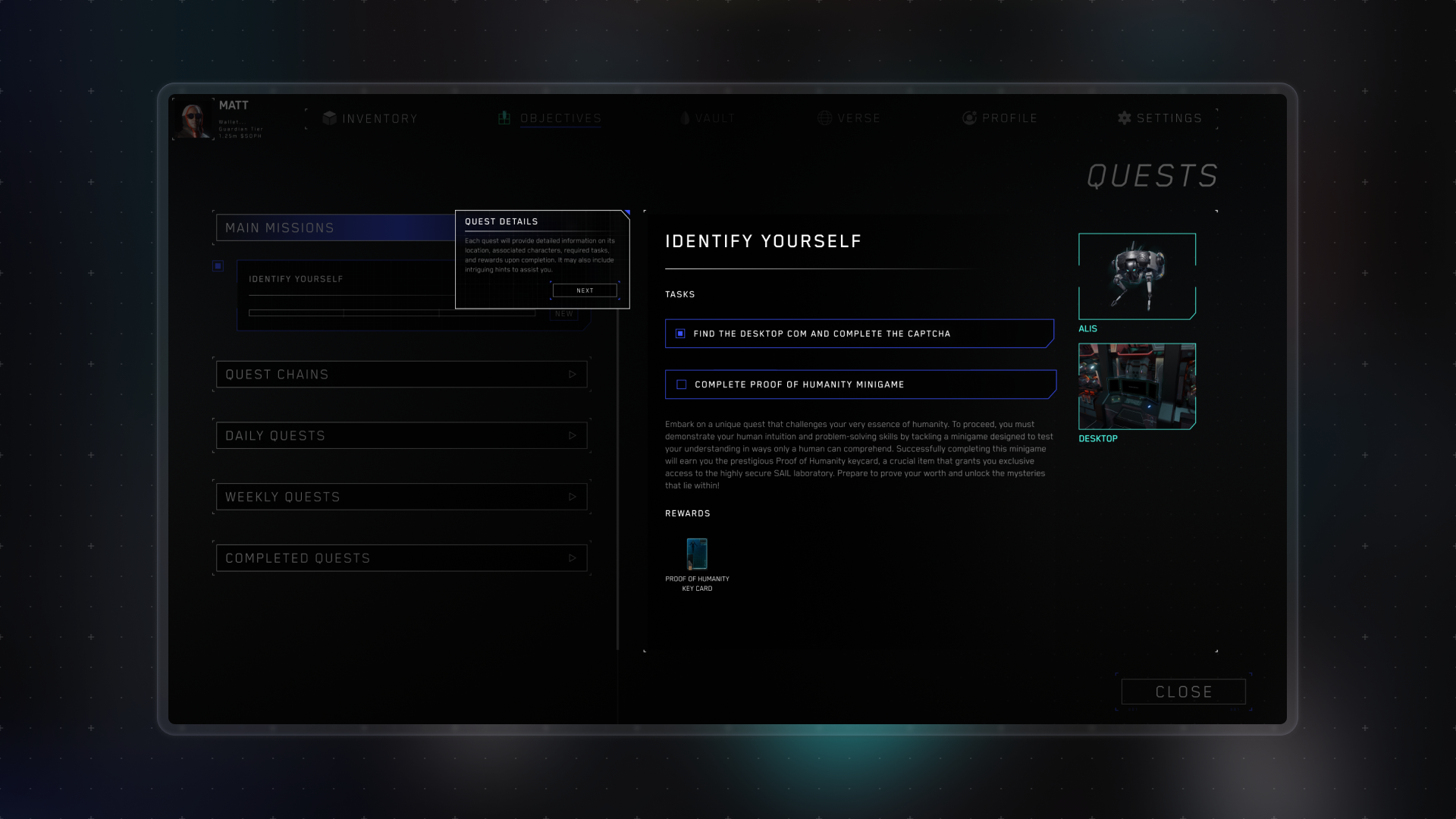
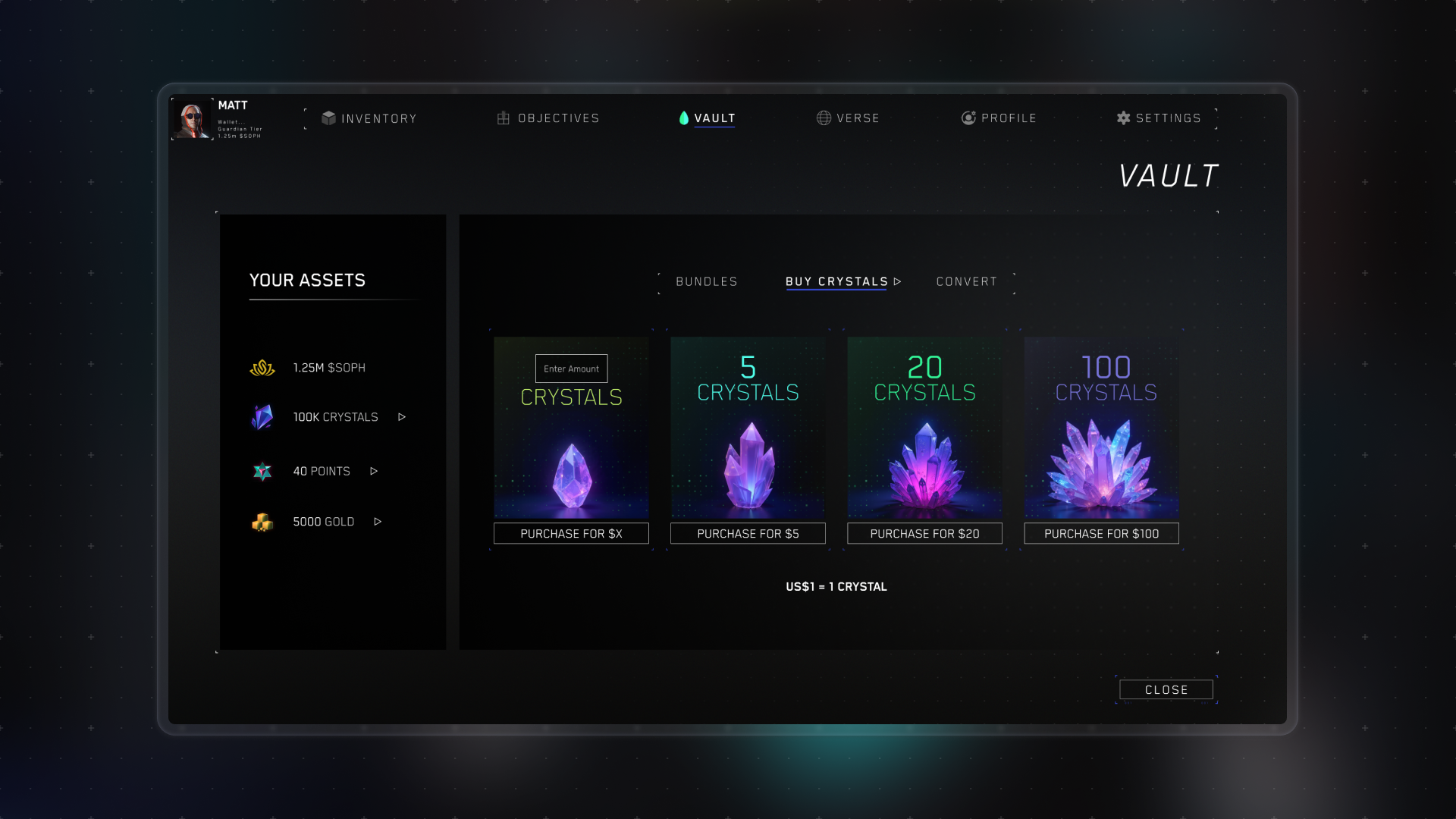
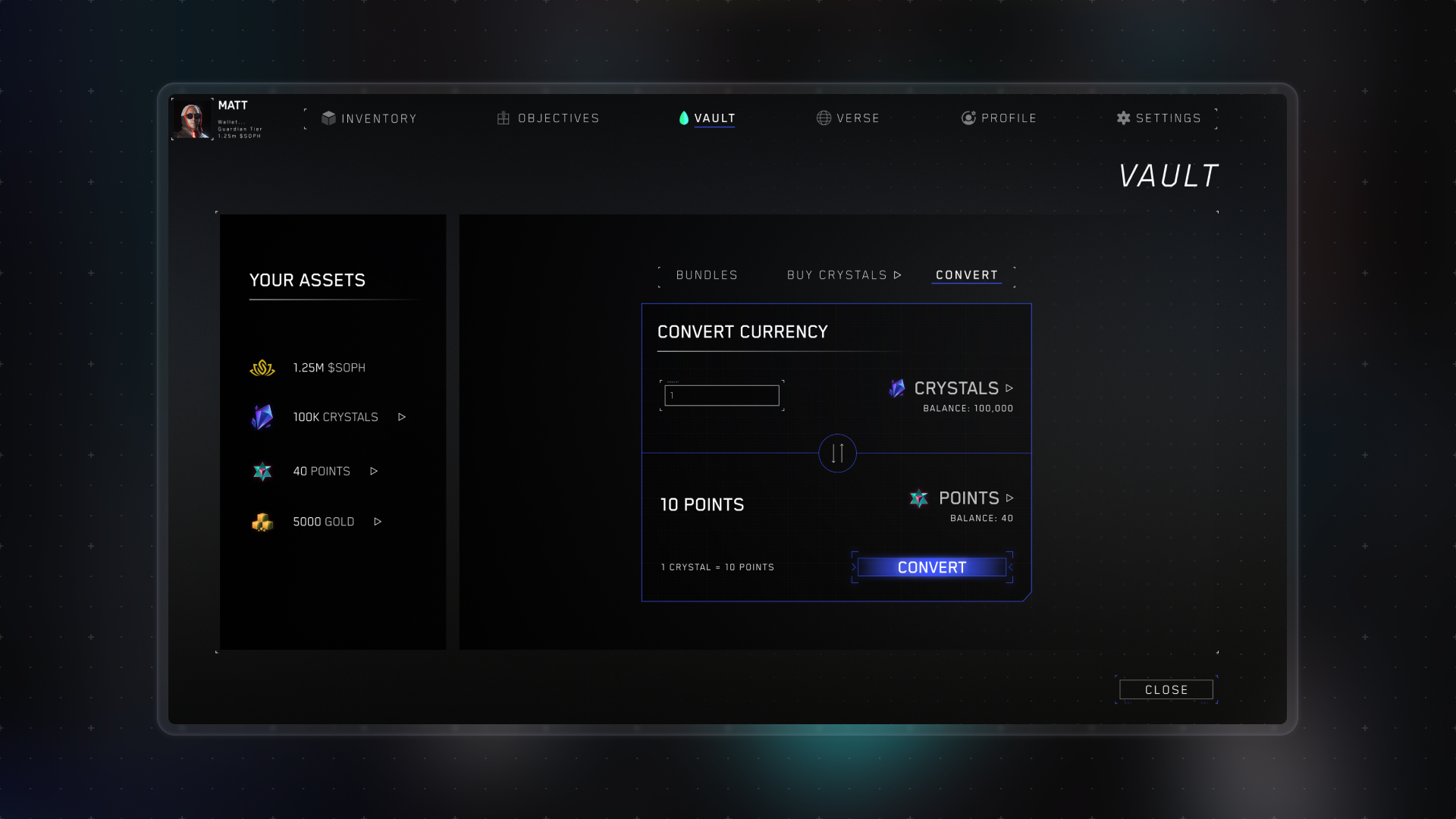
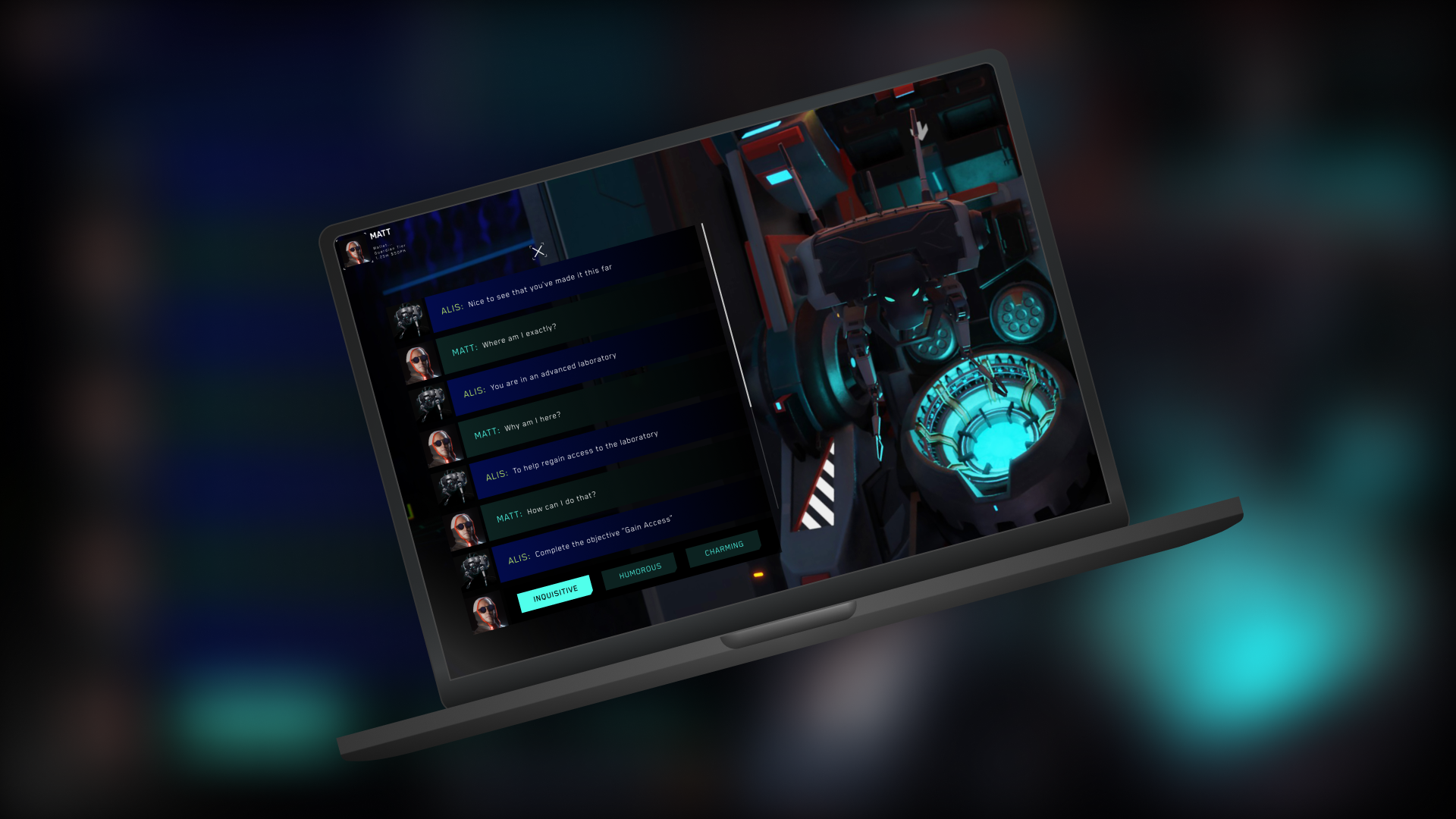
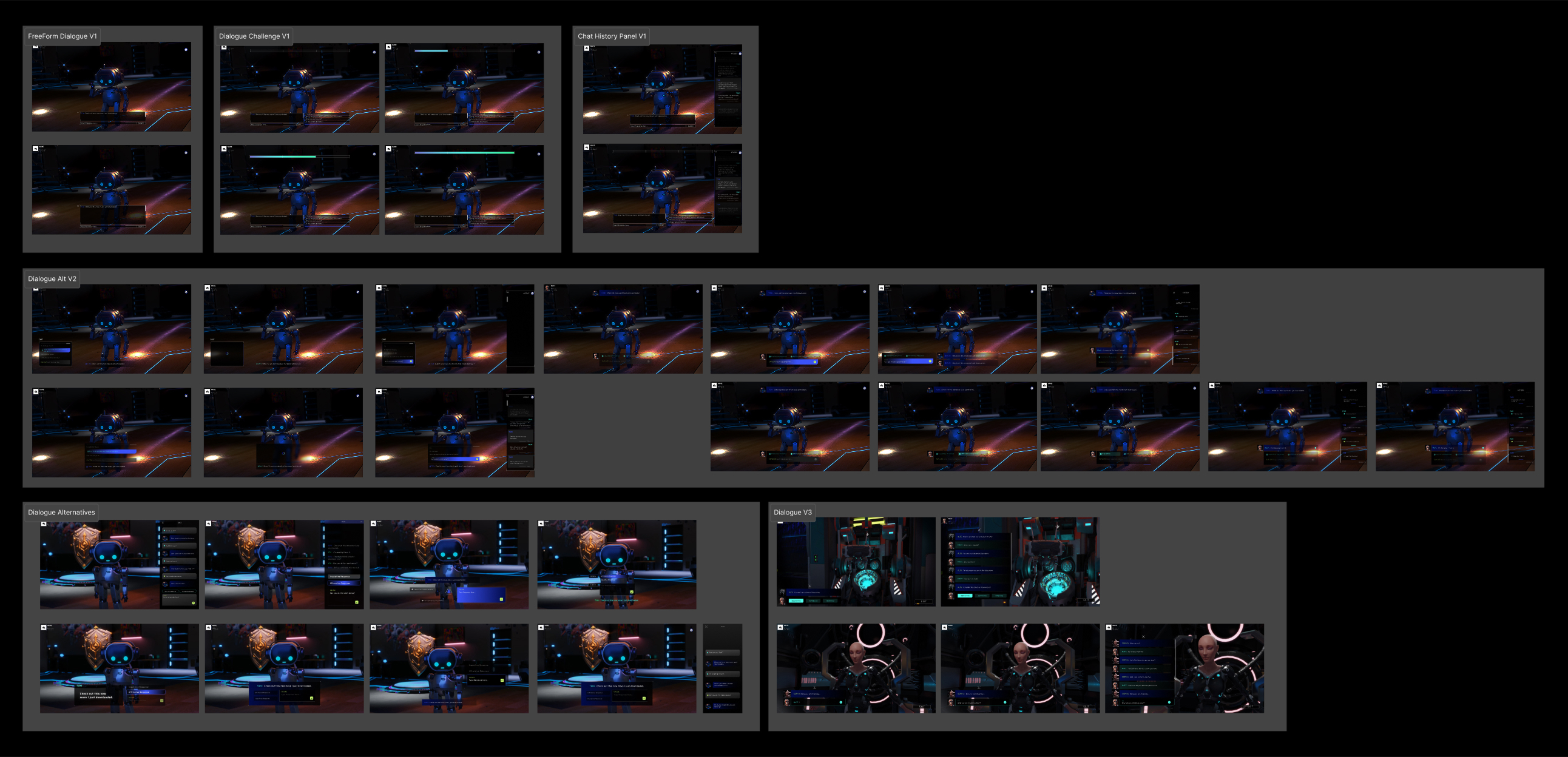
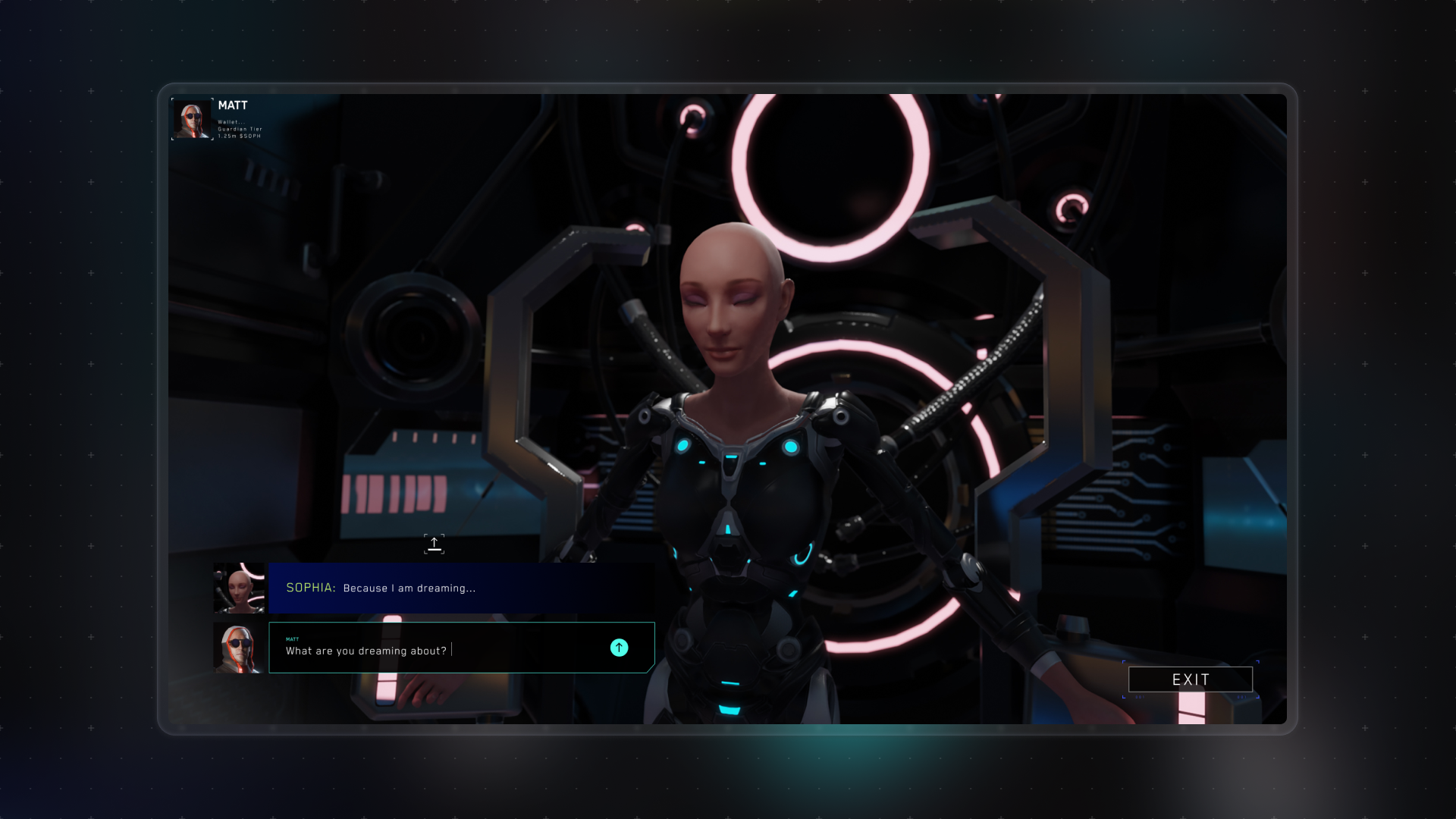
Designing the dialogue interface for Sophiaverse’s AI‑powered NPCs meant venturing into new territory real‑time conversations in games. We prototyped and animated different layouts to find what felt most intuitive, blending classic multiple‑choice prompts with free‑form input so players could type naturally or choose from guided responses. After user testing and team reviews, we settled on a minimal layout tucked in the lower‑left corner to preserve immersion. Clear buttons, simple choices, and quick chat access kept the interaction fluid and focused enhancing engagement without breaking the flow of play.
Beyond UI, I led the motion design work building gameplay simulations that developers could replicate in Unity. From pulsing rewards to smooth quest‑complete transitions, each animation added “game juice” that turned routine Web3 actions into rewarding, immersive moments. This hands‑on process sharpened my skills in futuristic HUD motion and particle effects while providing devs with precise timing blueprints, bridging SophiaVerse’s Web3 depth with the excitement of modern gaming.
The Open Alpha launch of SAIL marked SophiaVerse’s bold debut in the Web3 AI gaming world. Designed as a free‑to‑play experience, it offered seamless onboarding through either email or wallet login instantly engaging thousands of followers and SOPH token holders. This smooth, intuitive flow transformed community excitement into active participation, proving the power of SophiaVerse’s fusion of AI companionship, progression mechanics, and metaverse immersion.
Design Leadership
As UI lead, I guided cross‑team collaboration to align visuals with SophiaVerse’s futuristic vision. By maintaining a consistent design system and clear feedback loops, I streamlined production and ensured scalability across platforms.
HUD & Futuristic UI
I honed my HUD design skills, blending sci‑fi aesthetics with intuitive layouts. Translucent overlays and subtle motion made AI chats and Web3 features feel seamless within gameplay.
Motion Design
Using After Effects and Blender, I animated prototypes that clarified timing and elevated immersion. These motion cues turned functional Web3 interactions into engaging, game‑like experiences.